Quick Answer: First 60 Minutes
If water is actively entering through a foundation crack in your Greencastle basement or crawl space, do these things in order before anything else:
- Shut off power to the affected area at the breaker if water is near outlets or appliances.
- Move stored items at least six feet away from the wet wall.
- Photograph the crack, the water trail, and any wet contents for your insurance file.
- Place a bucket or shallow tray to capture the active flow, not to stop it.
- Do NOT seal the crack from the inside while water is flowing. Trapped water will find another exit.
- Call a restoration contractor for assessment, not just a plumber or mason.
Why Foundation Cracks Leak in the First Place
The Three Common Causes
- Hydrostatic pressure: Saturated soil pushes groundwater laterally against the wall until it finds the weakest point.
- Settlement cracks: Normal concrete cure shrinkage or minor soil movement creates vertical or diagonal hairline cracks.
- Freeze thaw expansion: Water enters a dry crack in fall, freezes in winter, and widens the opening by spring.
- Failed waterproofing membrane: Exterior coatings applied at construction degrade after 15 to 25 years, especially on the uphill side of a sloped lot.
- Clogged or collapsed footing drains: When the perimeter drain tile fails, water pools at the base of the wall instead of being carried away.
Where Water Usually Shows Up
- Vertical cracks below grade, often near the center of a long wall
- Cold joints where the floor slab meets the foundation wall
- Tie rod holes from the original pour
- Around basement window wells after heavy rain
- Step cracks in block walls, particularly at corners
If your intrusion is tied to a window well or grade issue rather than the wall itself, the diagnosis path overlaps with what we cover in our window well water intrusion guide.
Preventing the Next Intrusion
Exterior Steps That Pay Off
- Extend downspouts at least six feet from the foundation, ten feet on a flat lot.
- Re grade soil so the first ten feet slope away from the house at roughly one inch per foot.
- Keep mulch and landscaping below the top of the foundation wall, never piled against siding.
- Clean gutters twice a year, more often if you have mature trees overhead.
- Inspect window well covers and replace cracked liners before spring rains.
Interior Habits That Reduce Risk
- Run a basement dehumidifier from April through October to keep relative humidity below 55 percent.
- Check the sump pump quarterly and replace the unit every seven to ten years.
- Install a battery backup or water powered backup pump for storm outages.
- Walk the perimeter after every heavy rain and look for fresh efflorescence.
Most Greencastle homeowners we work with see intrusions cluster around the same two or three months each year, usually late winter thaw and midsummer storm season. Tracking when yours happens gives a foundation contractor useful diagnostic information.
What a Professional Response Looks Like
on site Assessment
When our Greencastle Water Restoration crew arrives in most cases within 2 hours, we map moisture with infrared and pin probe meters, identify the source path, and classify the water. Foundation intrusion is usually Category 1 (clean) on arrival but may already be Category 2 if it traveled through soil contaminants. Our water category guide explains why that classification drives every decision afterward.
Drying Strategy
- truck mounted extraction for standing water
- Targeted demolition only where materials are non salvageable
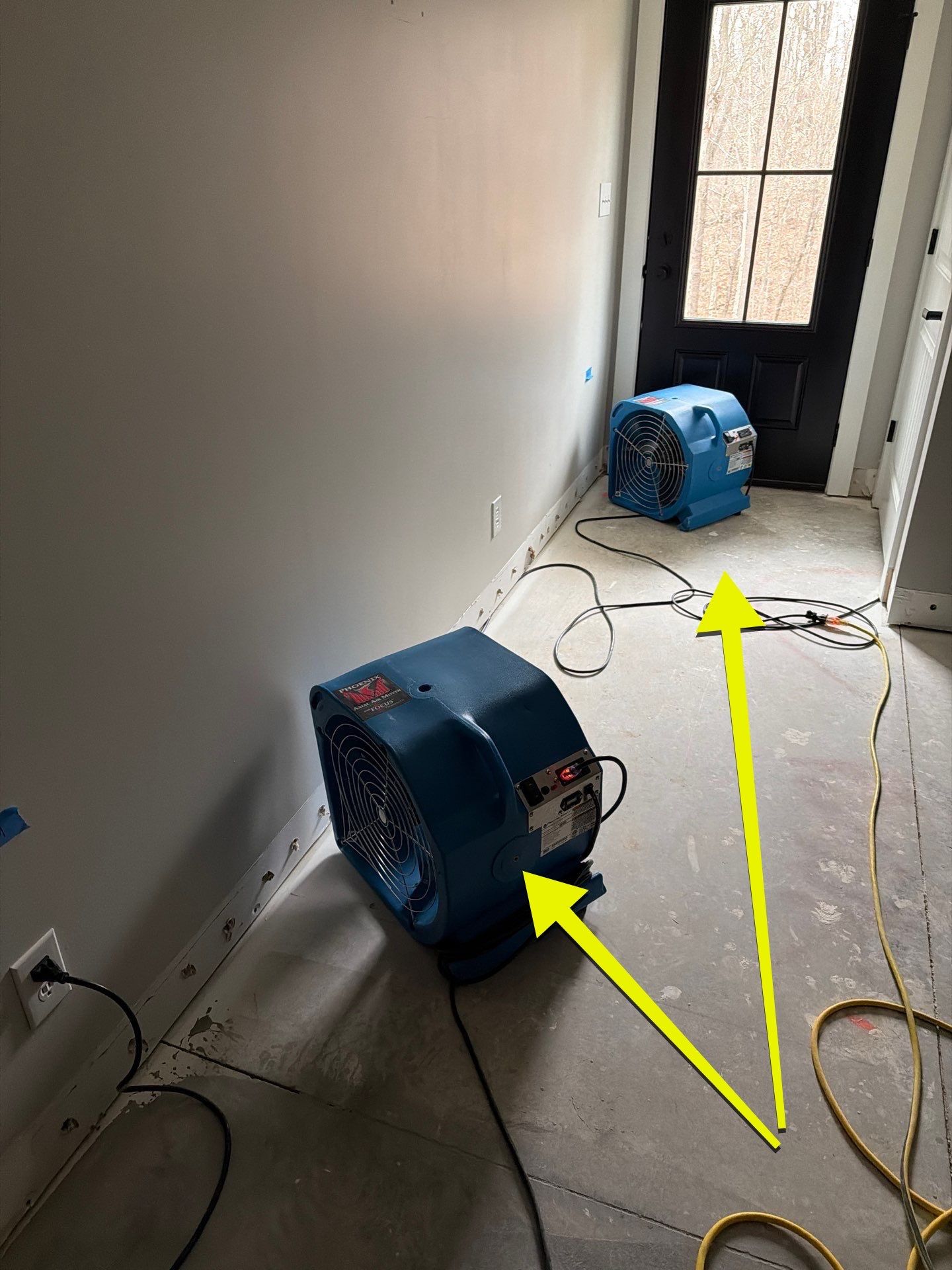
- Air movers and dehumidifiers sized to the cubic footage
- Daily moisture readings until materials hit dry standard
- Cavity drying with injection systems where wall assemblies cannot be opened
Coordination With Other Trades
Restoration handles the water and the affected materials. Sealing the crack itself is foundation work, and grading or drain tile is excavation work. We document everything for your insurance carrier and coordinate timing so the foundation repair happens before reconstruction begins. If you are unsure whether your policy will respond, our overview of what homeowners insurance covers is a useful starting point.
Risk Timeline: What Happens If You Wait
| Time Since Intrusion | What Is Happening | Typical Repair Scope |
|---|---|---|
| 0 to 24 hours | Surface wetting, minor wicking into drywall base | Extraction, drying, monitor |
| 24 to 72 hours | Microbial growth begins, insulation saturates | Partial drywall removal, antimicrobial |
| 3 to 14 days | Visible mold, framing moisture, odor | Containment, demolition, remediation |
| 2 weeks plus | Structural framing risk, HVAC contamination | Full remediation, possible reconstruction |
The 48 hour threshold is not marketing language. It is the documented window in which mold spores begin colonizing wet organic materials, which is why we treat foundation intrusion as time sensitive even when the water volume seems minor. Fiberglass batt insulation behind a finished wall is especially vulnerable because it holds moisture against the framing without visible signs until the smell appears.
Decision Checklist Before You Call Anyone
- Is the water actively flowing or has it stopped?
- Is the affected area finished or unfinished?
- How long has the crack been leaking that you know of?
- Are there musty odors, visible staining, or efflorescence on the wall?
- Have you had previous intrusions in the same spot?
- Do you have photos or video from earlier events for comparison?
Answering these six questions before the phone call helps any contractor give you a more accurate scope and avoids the back and forth that wastes a day you do not have.