Most water damage jobs in Greencastle land somewhere between 1,500 dollars on the small end and 8,000 dollars in the middle, with larger losses involving sewage, structural saturation, or multi-room flooding climbing into the 10,000 to 25,000 dollar range. That spread feels enormous until you understand the three levers that move the number: how much water, what kind of water, and how long it sat before someone started extraction. A clean supply line leak caught within six hours behind a single bathroom vanity is a completely different invoice than a sewage backup that traveled across a finished basement overnight, and pretending otherwise would be dishonest.
The IICRC, which is the certification body that governs our industry, sorts every loss into three categories. Category 1 is clean water from a broken supply line, a leaking refrigerator hose, or an overflowing sink. Category 2, often called gray water, includes washing machine discharge, dishwasher overflow, or sump pump failure where the water has picked up contaminants. Category 3 is black water, meaning sewage, toilet backups containing solid waste, or floodwater from outside. Pricing roughly doubles between Category 1 and Category 3, because Category 3 requires full PPE, controlled demolition of porous materials, and certified disposal. If you want the deeper walkthrough of what a sewage event involves, our guide on sewage backup cleanup and safe restoration covers it in detail.
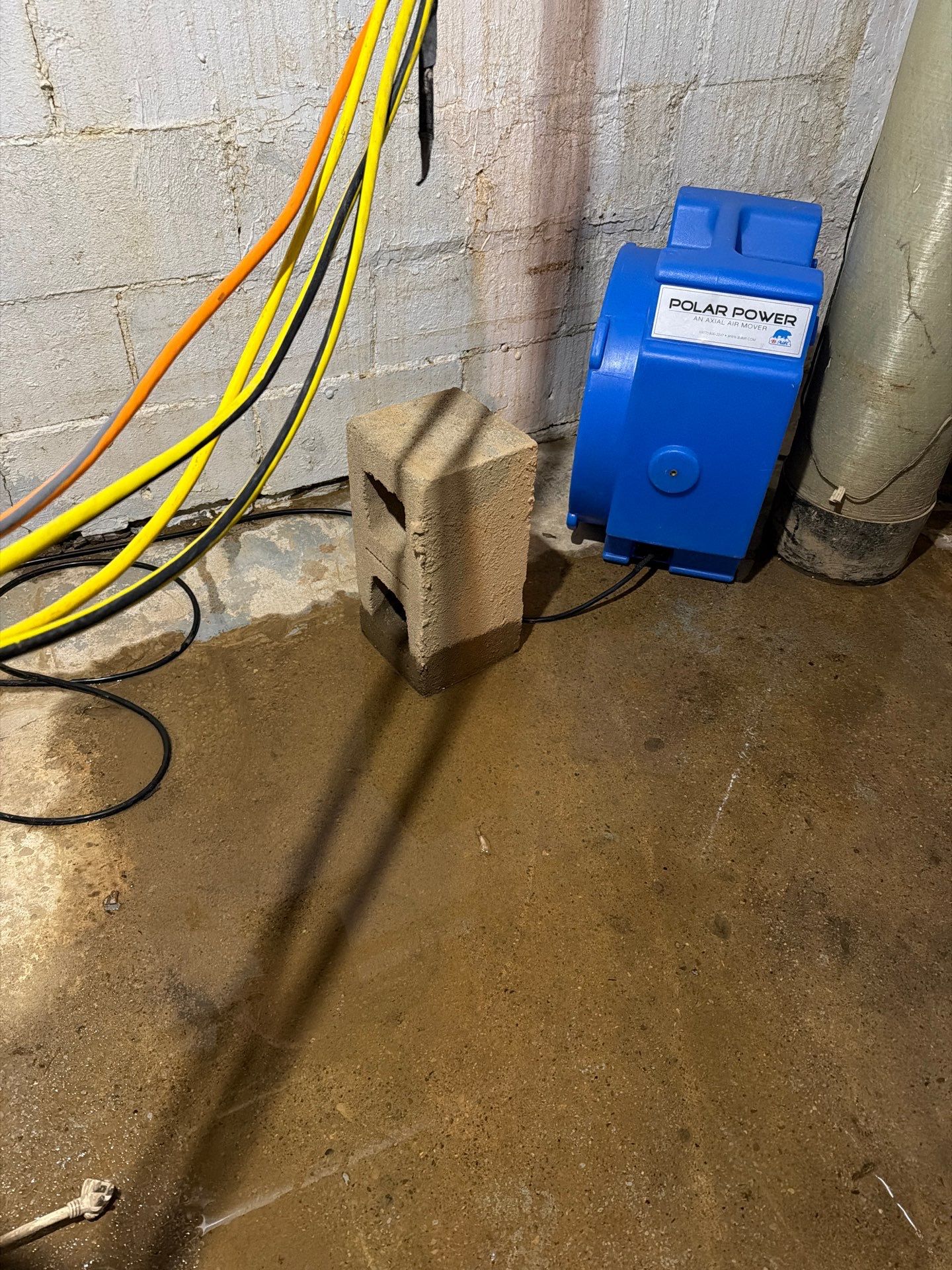
The other big driver is class, which describes how deeply the water has penetrated. Class 1 means minimal absorption into porous materials, which is the cheapest scenario. Class 4 means saturation has reached hardwoods, plaster, concrete, or behind tile, requiring specialty drying equipment like desiccant dehumidifiers and injection drying systems that run longer and cost more per day. A typical drying job runs three to five days, and equipment rental is usually billed at 75 to 150 dollars per air mover per day and 125 to 250 dollars per dehumidifier per day. A flooded Greencastle basement might need eight air movers and two large dehumidifiers running for four days, and just that line item lands between 4,000 and 6,500 dollars before anyone touches drywall.
Where Your Money Actually Goes
Extraction is the first line on most invoices, and for standing water it usually runs 500 to 1,500 dollars depending on volume and access. After that comes antimicrobial application, which protects against mold growth during the drying window and typically adds 250 to 600 dollars for an average residential job. Controlled demolition, meaning the careful removal of unsalvageable drywall, baseboards, insulation, and flooring, is where invoices stretch the most. Removing four feet of saturated drywall around a flooded room, bagging insulation, and prepping for reconstruction often runs 1,200 to 3,500 dollars, and that is before any rebuild work begins. Hardwood floor drying, when salvageable, adds another 1,000 to 2,500 dollars because the mat systems and monitoring time are intensive.
Content manipulation and contents pack out are line items homeowners rarely anticipate. When a finished basement floods, furniture has to be moved, electronics inventoried, rugs rolled and tagged, and anything porous evaluated for salvage. On site content manipulation typically adds 200 to 500 dollars, while a full pack out to an offsite cleaning facility can run 1,500 to 4,000 dollars depending on volume. If textiles, upholstered furniture, or important documents are involved, specialty cleaning and ozone treatment add another layer. We document every piece with photos and a written inventory so the insurance carrier has no reason to question the scope, and you have a record if anything is lost or damaged in transit.
Reconstruction is a separate phase and a separate budget. Mitigation gets your home dry, clean, and stable. Rebuild puts the drywall back up, replaces the flooring, repaints, and reinstalls trim. For a typical finished Greencastle basement loss, expect mitigation in the 5,000 to 9,000 dollar range and reconstruction anywhere from 6,000 to 20,000 dollars depending on finishes. We walk through both phases in our breakdown of restoration cost and 24/7 emergency service, which pairs nicely with what you are reading right now.
Insurance, Deductibles, and What You Will Actually Pay
Most homeowner policies in Indiana cover sudden and accidental water damage, which means a burst pipe, an appliance failure, or a roof leak from a covered storm event. They typically do not cover gradual leaks, long-term seepage, or groundwater intrusion unless you carry a separate flood or sump pump rider. When the loss is covered, your out of pocket usually equals your deductible, often 1,000 to 2,500 dollars, plus any depreciation on older materials. We bill the carrier directly using Xactimate, which is the same estimating software adjusters use, so line items match what your insurer expects to see. That alignment is one of the biggest reasons claims get approved without back and forth. If your situation involves a burst supply line, the immediate response steps in our piece on burst pipe water damage and repair cost can save you thousands by limiting secondary damage before crews arrive.
One detail worth understanding is recoverable depreciation. When an adjuster writes an estimate, they often hold back depreciation on aged materials like fifteen year old carpet or original builder grade flooring, releasing those funds only after reconstruction is complete and receipts are submitted. That holdback can be 15 to 30 percent of the rebuild estimate, which means your initial check feels smaller than the total approved scope. Greencastle Water Restoration handles the supplemental submission and depreciation release paperwork on your behalf, because chasing those funds yourself is the kind of administrative work that pulls homeowners away from their families during an already stressful period.
Time is the variable nobody talks about enough. Every hour water sits, more materials cross the line from salvageable to disposal. Drywall that could have been dried in hour four often needs full removal by hour twenty. Hardwood that might have flattened with mat drying on day one is cupped beyond rescue by day three. This is why we run 24/7 dispatch across Greencastle and the surrounding communities, and why our trucks are stocked rather than dispatched from a warehouse across the state. A two hour response window can be the difference between a 4,000 dollar invoice and a 14,000 dollar one, and that math holds whether you live near Broad Ripple, Greenwood, Fishers, or out toward Brownsburg.
The honest summary is that water damage pricing is not arbitrary, but it is also not something you can quote accurately over the phone without eyes on the loss. Anyone giving you a firm number sight unseen is either overcharging to protect themselves or underbidding to win the job and changing the invoice later. A real estimate requires moisture readings, category identification, and a square footage map of affected materials. That visit, for us, is free, and the written scope you receive afterward is yours to keep whether you hire Greencastle Water Restoration or compare it against another bid.